
Understanding a BMX Racing Track: Key Features and Racing Obstacles
Understanding the layout and obstacles of a BMX track can help both new riders and fans appreciate the complexity of the sport and the respect you should show a track when you are riding. While no two tracks are exactly alike, many share similar features that test a rider’s skill, speed, and strategy. Here’s a comprehensive guide to the common parts of a BMX racing track:
The Start Hill
The race begins here. The start hill is a tall, steep slope that gives riders the momentum they need to power into the track. Riders launch down the hill after the gate drops, and the faster they can accelerate here, the better their position going into the first straight and taking the all important holeshot!

The Start Gate
At the top of the start hill is the start gate, a mechanical barrier that holds all riders in place at the start of the race. When the gate drops, it’s go-time! Riders must react quickly to get the jump on their competitors. Gates are usually 24 feet wide and have 8 lanes but there are smaller variations out there.
Staging Area
Before heading to the gate, riders wait in the staging area or as it is also know “The Pens”—sometimes called “the back of the hill.” This is where riders line up by their assigned gate positions, get organized, and prepare for their race.
Some key information about pens:
Pens will will usually have 10 pens numbered 0 – 9 at the back of the start hill. Each Pen represents the race you are supposed to be in. To find the Pen you are supposed to be a part of,
The Straights
Between each turn, the track stretches into a straight—a section of level or slightly descending terrain filled with a variety of jumps and obstacles. This is where riders show off their speed and technical skill, navigating features like rollers, doubles, and rhythm sections.
Step-Down
A step-down is a tall hill immediately followed by a smaller one. The rider “drops” into the lower landing, using gravity to gain speed. It’s important to push through this feature to maintain momentum.
Roller
A roller is a small, rounded bump that can come solo, in twos, or even in long sequences. Depending on the rider’s skill, rollers can be pumped, manualed, or even jumped for speed advantage.
Rhythm Section
One of the most technical parts of a track, the rhythm section is a series of small, closely spaced jumps. Riders must “pump” through this section by shifting their weight and pushing down through transitions, rather than pedalling. Rhythm sections reward balance, timing, and flow.
Double
The double is one of the most common jumps in BMX racing: two mounds spaced apart so that riders can jump from the lip of the first to the landing of the second. Timing, line choice, and confidence are key to clearing doubles efficiently.
Step-Up
A step-up is the opposite of a step-down—a small hill followed immediately by a taller one. Riders jump up to the higher platform. Step-ups demand both power and precision.
Tabletop
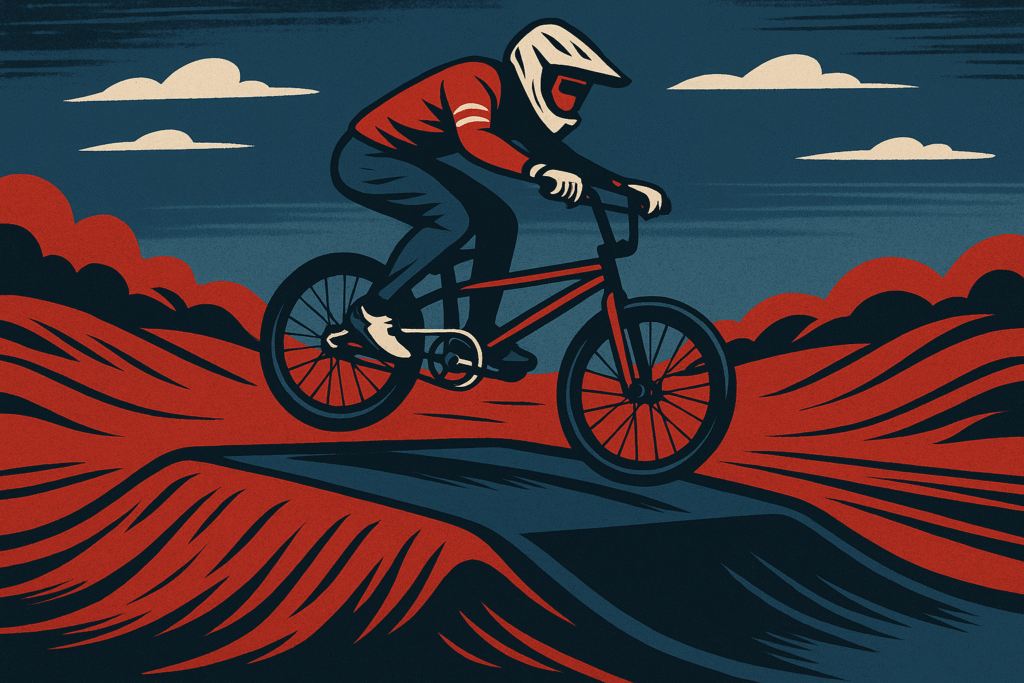
This jump looks like a table. The tabletop has a flat section between the take-off and landing, making it a safer option for newer riders while still offering challenge for pros who choose to jump the full distance. It’s a great all-around jump that appears on many tracks.
Berm
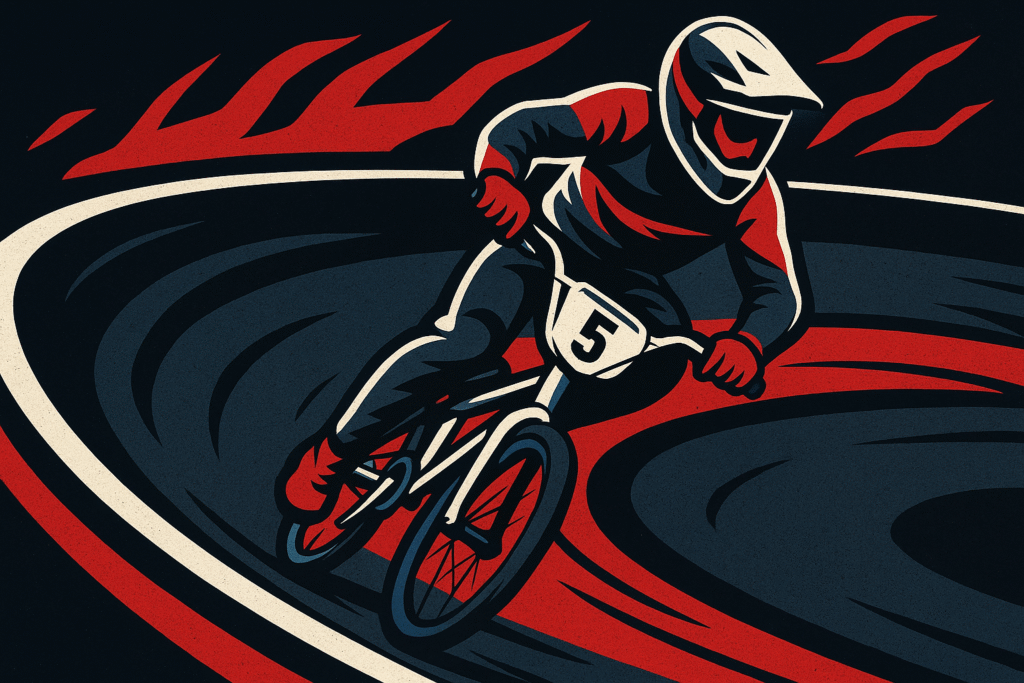
Turns in BMX racing are called berms—banked corners that allow riders to maintain or even increase their speed. They come in all sizes and shapes: tight and technical, wide and sweeping, or somewhere in between. Choosing the right line through the berm can make or break a race.
Finish Line
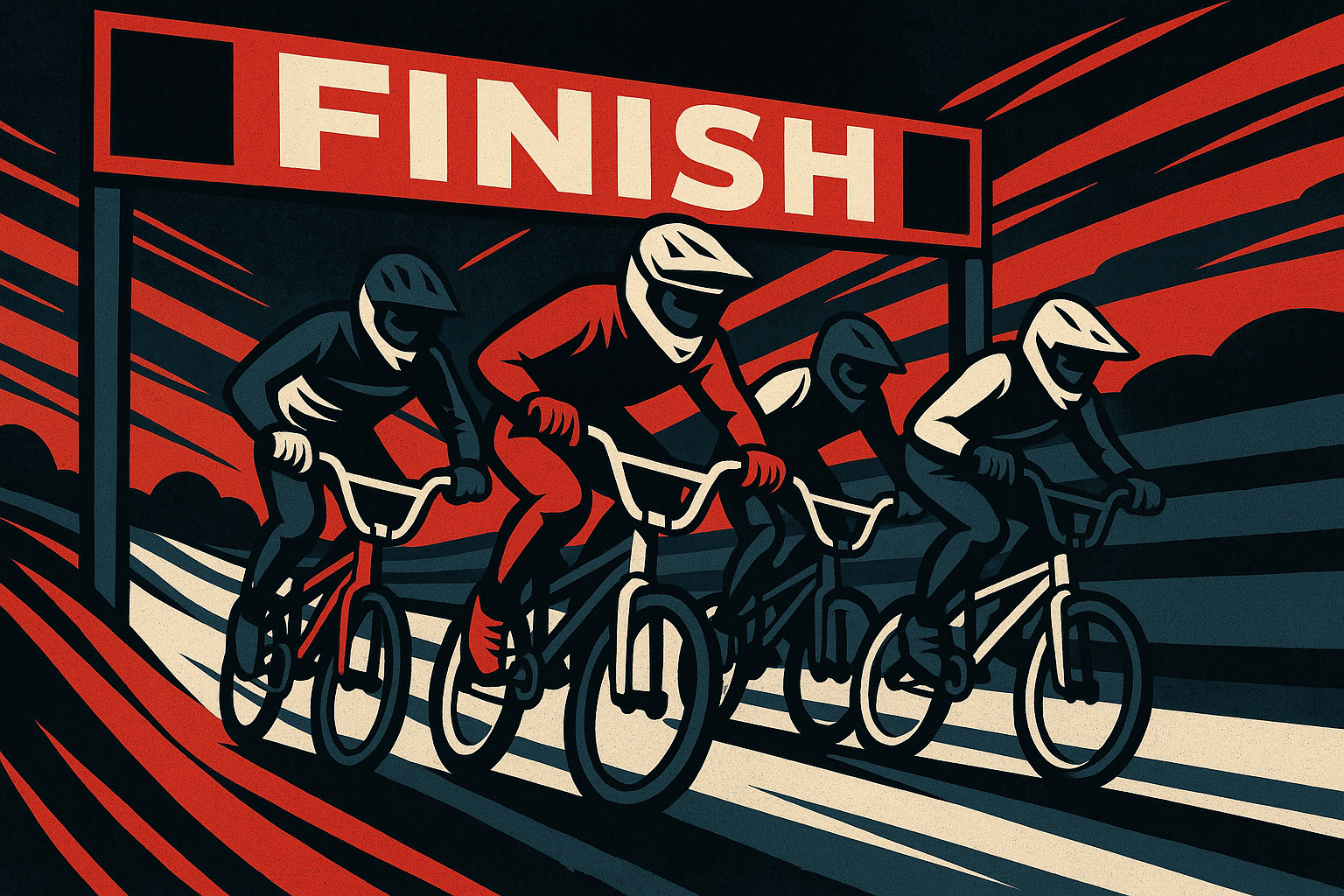
The race ends at the finish line, marked clearly at the end of the last straight. Riders give one final sprint to secure their placing—sometimes leading to dramatic photo finishes!
Track Shapes
While track features may vary, many BMX tracks follow similar layouts. Common shapes include “M,” “W,” “S,” and “U” configurations, with turns and straights creating flowing circuits. Each layout brings a different strategy into play.
Whether you’re a beginner learning the ropes or a spectator trying to understand the action, knowing the track features is key to appreciating BMX racing. Each obstacle demands its own set of skills, and mastering them all is what separates the good riders from the great ones.
Ready to race?